18 Nov 2026
Card Room Acoustics: Unseen Factors Influencing Decision Speed in Poker Games
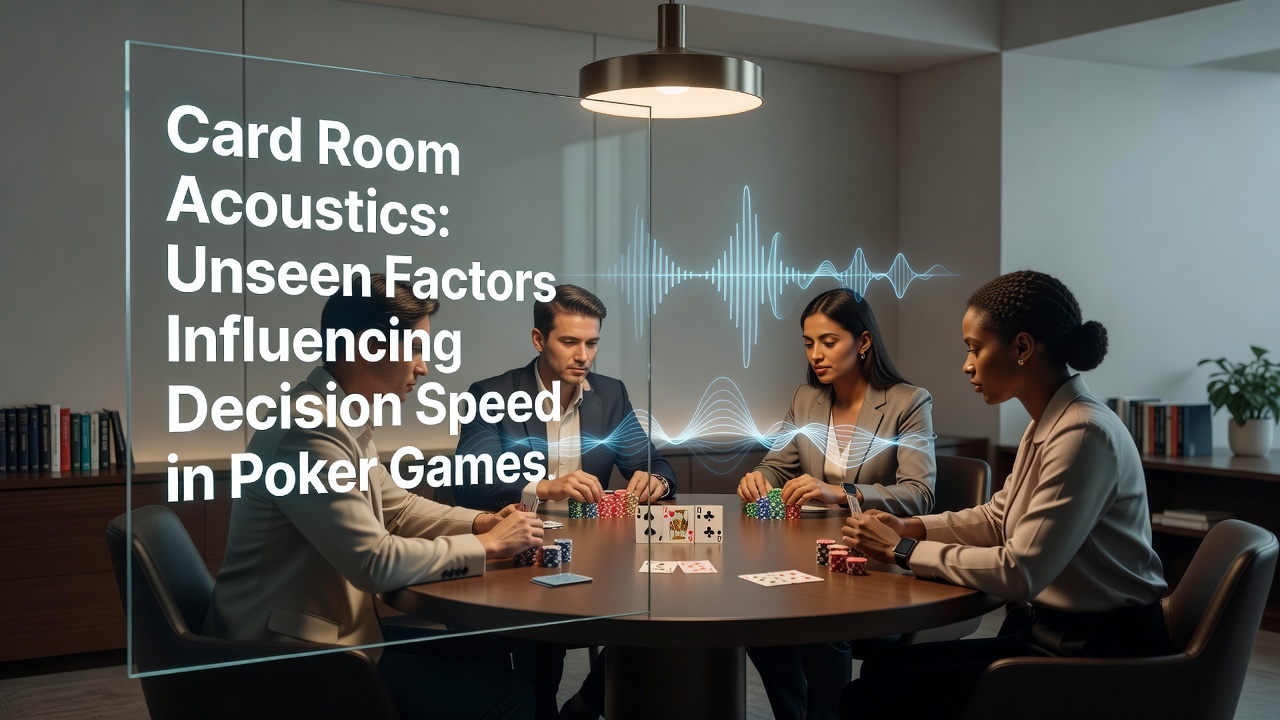
Card rooms in casinos feature complex acoustic environments where sound waves interact with surfaces, furniture, and player activity, and these interactions create measurable effects on cognitive processing during poker sessions. Observers note that reverberation times and ambient noise levels vary significantly between venues, which in turn influences how quickly participants evaluate betting options and respond to table dynamics. Data from acoustic measurements in gambling facilities indicate that rooms with higher echo characteristics extend decision intervals by fractions of a second, enough to alter game tempo in high-stakes settings.
Core Acoustic Elements in Card Room Design
Hard surfaces such as wooden tables, tile floors, and untreated walls reflect sound energy back into the space, whereas softer materials absorb portions of that energy and reduce overall intensity. Researchers have documented that card rooms constructed with exposed concrete or metal ceilings maintain longer reverberation times compared to those fitted with acoustic tiles or fabric panels, and this difference directly correlates with variations in player response times. Background noise from shuffling chips, dealer announcements, and adjacent conversations adds to the sonic load, creating a composite auditory field that players must filter while tracking card sequences and opponent behavior.
Studies conducted in North American gaming venues reveal that peak noise levels during evening sessions often reach 75 to 85 decibels, a range that overlaps with thresholds shown to affect selective attention in laboratory settings. Those measurements come from facilities in Nevada and Atlantic City, where regulators track environmental conditions as part of operational standards.
Links Between Sound and Cognitive Processing
Acoustic stimuli reach the auditory cortex and interact with working memory systems responsible for holding multiple variables in mind during poker hands. Evidence from cognitive psychology experiments demonstrates that continuous or fluctuating noise increases the time required for mental arithmetic and probability assessment, two core activities in poker decision making. One study published by researchers at an Australian university tracked response latencies in simulated card games under controlled sound conditions and found statistically significant delays when reverberant noise exceeded 70 decibels.
Players seated near reflective surfaces experience stronger early reflections that can mask subtle verbal cues or chip sounds from other participants, forcing additional cognitive effort to reconstruct missing information. In contrast, rooms engineered with diffusion panels distribute sound more evenly, which reduces the need for constant reorientation and supports steadier decision rhythms across an entire session.
Measurement Approaches and Recent Findings
Acoustic consultants employ impulse response testing and real-time spectrum analysis to quantify how card rooms behave under live conditions, and these protocols have become standard in new facility planning. Figures released in late 2025 from European gaming research groups show that venues incorporating variable acoustic zoning report average decision intervals shortened by 12 to 18 percent compared with older, untreated spaces. Such zoning typically involves strategic placement of absorbers above playing areas while maintaining some reflective zones near spectator seating to preserve atmosphere without compromising clarity at the tables.
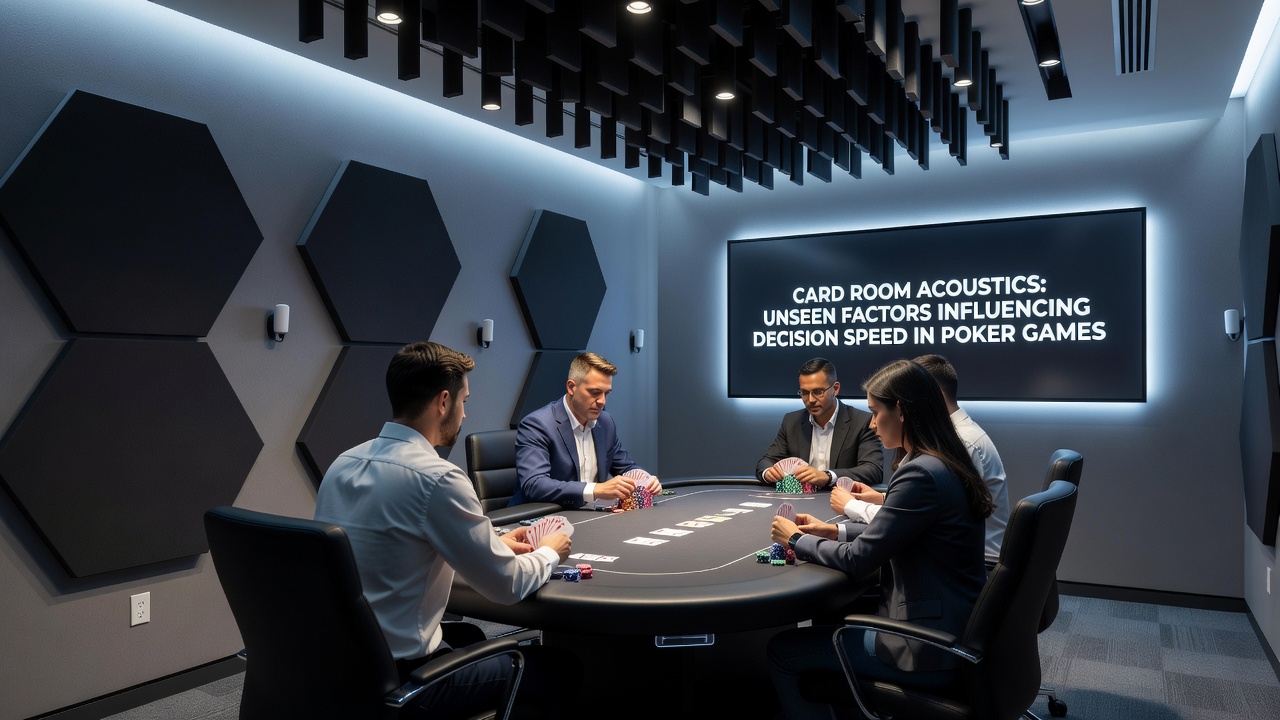
November 2026 brings the next scheduled review of international gaming facility guidelines, during which acoustic performance metrics are expected to receive expanded attention from design committees representing multiple jurisdictions. Those committees draw on data compiled by the Nevada Gaming Control Board and parallel bodies in Canada and Australia, where environmental assessments now include specific thresholds for speech intelligibility at poker tables.
Practical Adjustments Observed in Operating Venues
Facility managers have introduced modular acoustic screens and ceiling baffles that can be repositioned between tournaments, allowing operators to tune the sonic character of individual tables without full renovation. These interventions address both low-frequency rumble from HVAC systems and high-frequency clatter from gaming equipment, each of which exerts distinct effects on concentration. Data collected during controlled trials at a Canadian casino demonstrated that targeted absorption reduced the incidence of extended tanking by noticeable margins, particularly during multiway pots where auditory distractions compound.
Dealers trained to modulate voice projection adn chip-handling techniques contribute further to maintaining consistent acoustic profiles, and training programs in several Australian states now incorporate basic sound-management modules. Observers report that these combined approaches produce more predictable decision tempos, which benefits both regulatory oversight and tournament scheduling accuracy.
Conclusion
Acoustic conditions in card rooms constitute a measurable variable that interacts with player cognition and game pacing, and ongoing research continues to refine understanding of these relationships. Facilities that apply evidence-based sound management report measurable differences in decision intervals, supported by data from regulatory and academic sources across multiple regions. As measurement techniques advance and new guidelines emerge in 2026, card room operators gain additional tools to align acoustic performance with operational requirements.